


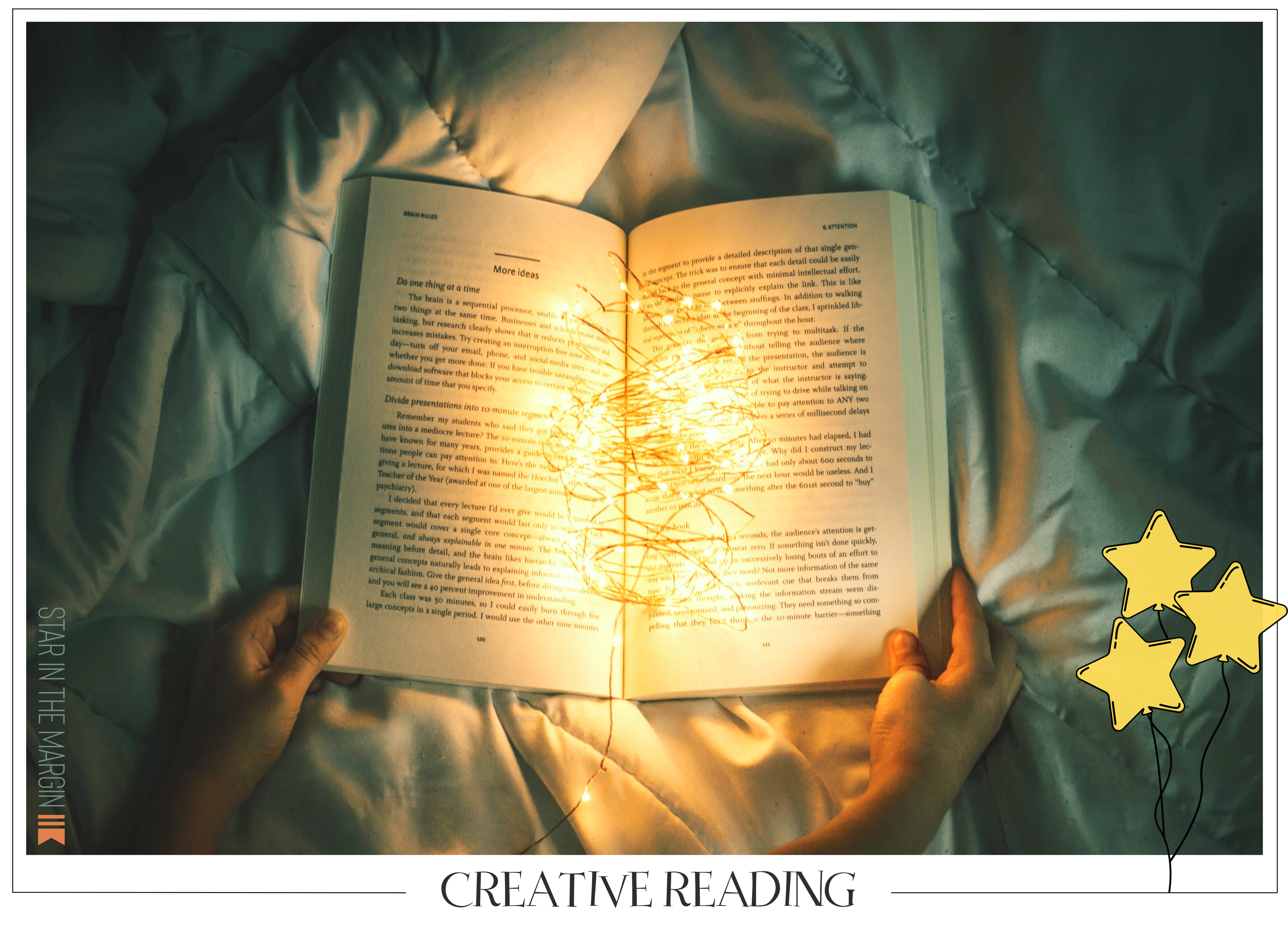
One of the most widely quoted lines from Stephen King’s first and so-far-only book of nonfiction, On Writing, is: Books are a uniquely portable magic. I love this quote as much as everyone else, for the simple yet extraordinary truth of it. You don’t even have to be an avid reader or writer to get it, either; anyone who’s ever been moved or transported by a book probably understands exactly what he means. (And, not for nothing, the rest of the book is excellent, too.)
And then there’s that delightfully interstellar rascal, Carl Sagan:
“What an astonishing thing a book is. It’s a flat object made from a tree with flexible parts on which are imprinted lots of funny dark squiggles. But one glance at it and you’re inside the mind of another person, maybe somebody dead for thousands of years. Across the millennia, an author is speaking clearly and silently inside your head, directly to you. Writing is perhaps the greatest of human inventions, binding together people who never knew each other, citizens of distant epochs. Books break the shackles of time. A book is proof that humans are capable of working magic.“
~ Carl Sagan [Cosmos, Part 11: The Persistence of Memory (1980)]
MAGIC AGAIN! But it’s the magic month, friends ~ when the veils between the seen and unseen worlds begin their thinning, and eventually all but come shimmering down like so much water or satin slipping off to expose the secret Other Side of things. Books! Talk about magic—their Other Sides are nothing short of it.
One more favorite of mine, for good measure (and because if we’re not here to share favorites with each other, what are we even doing?), this one from the famously stormy and subversive French poet, Charles Baudelaire:
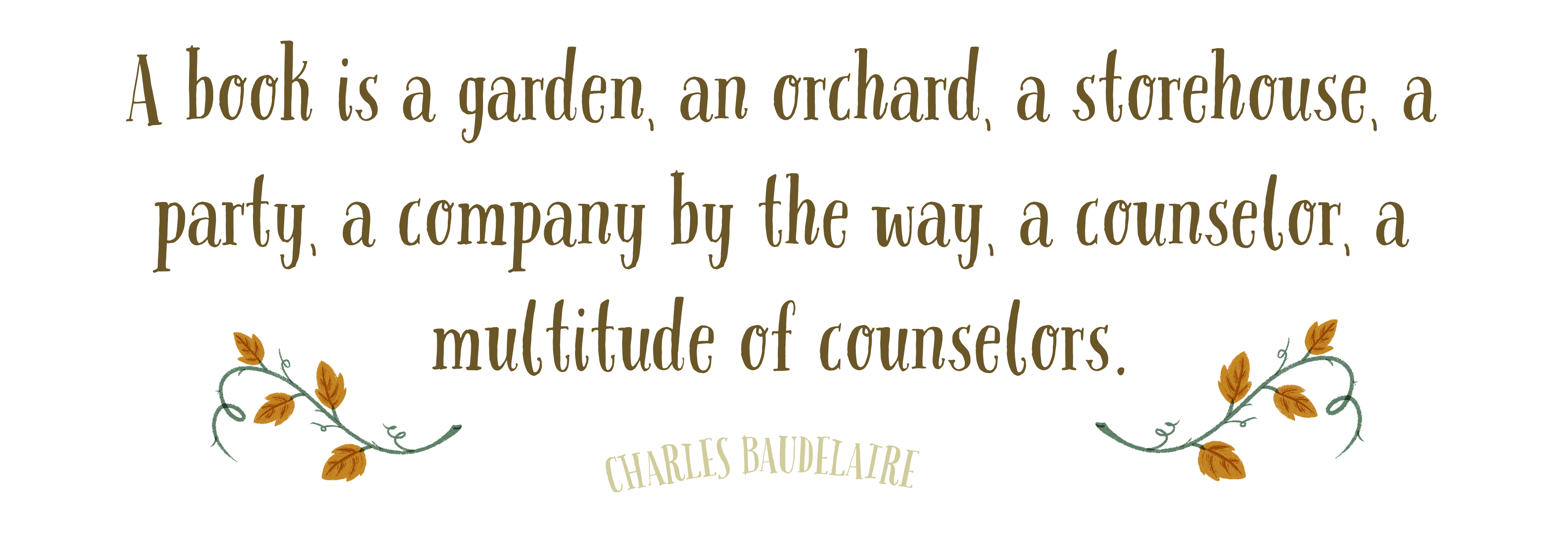
A BOOK: charm, counsel, and balm enough to soothe even the stormiest among us. You only have to read a few good ones to know this is true. But books are also creative treasure chests if we open them with that in mind–and that’s what we’re talking about this week. How to open a book and see its treasures, to access the particular magic of its multidimensional Other Side. And—this is the kicker—finders keepers! If you do it right, you get to keep the treasures!
Of course there’s no “right” way to read, but I do think there are maybe some wrong ways. Speed-reading is a wrong way (especially if you’re a writer). Know-it-all is a wrong way. Hurried, harried, or hassled are wrong ways; to read in these ways is to likely miss the magic completely (though, mischievous as magic is, it might not necessarily miss you. . .).
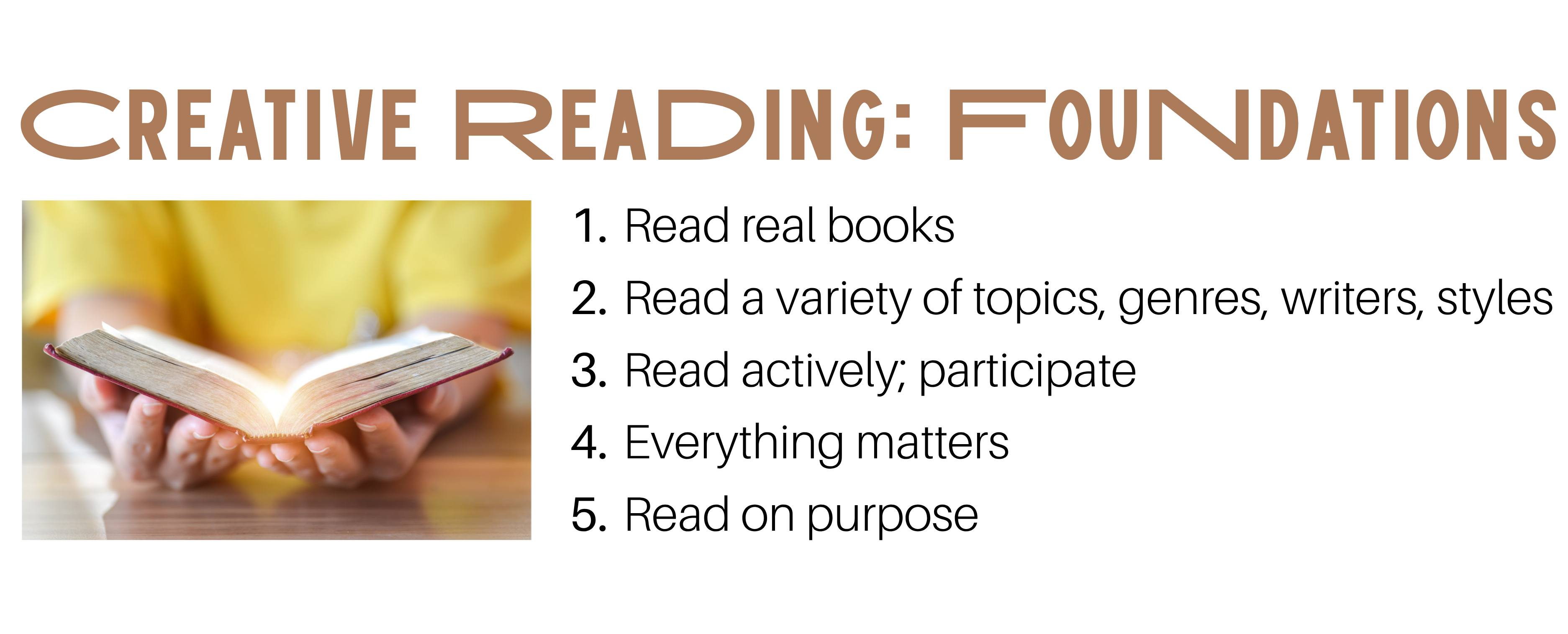
If you want to read the way where you get to keep the shiny stuff, I made one up. Abracadabra! It’s called CREATIVE READING. Here’s what it’s about.
Let’s talk about it.
1. Read real books
There’s proof that not only is reading supportive for our mental-emotional health, but it’s markedly therapeutic for our physiological health, too. Reading builds both gray and white matter in the brain (tissues that play critical roles in memory, emotions, and movement, and communication and coordination between different brain and body regions, respectively) making it profoundly beneficial for cognitive function and resiliency.
Studies also show that reading physical books is pretty dramatically better than screen-reading for comprehension, absorption, and retention. A real book is an excellent companion! It’s portable, has nothing behind the scenes or off to the side to distract you, and it’s not bad for your eyes. It can’t run out of battery! There’s no triggery implicit urge to scan or skim. The intimacy and physicality of a real book is such an important part of its magic. You thump it open and, Ta-da! It’s just you, the author, and both your wild imaginations twirling together across the invisible net.
2. Read a variety of topics, genres, and styles
When we intentionally or accidentally stick ourselves in ruts with our choices (I only cook with these three spices), everything shrinks accordingly. Staying in a little box whittles away our courage, sabotages our confidence, undermines our sense of personal agency, squelches our potential for adventure, and keeps us from feeling the excitement that comes with learning new things and expanding our sense of what’s possible (everything tastes the same).
Keeping an experimental attitude about reading means you’ll regularly reactivate the energy of discovery, nerve, and learning, add fuel to your creative stove, pull input from everywhere, and refill your well with all sorts of things that you’ll then be able to draw from as you’re doing your own inventing. When you lower the bucket down, who knows what you’ll come up with! There’s a lot going on down there. 💛
3. Read actively: participate
To read actively is to really engage in the (naturally participatory) process of reading, to make reading a purposefully dynamic process. Star the margins (!), read some out loud to feel it in your body and hear it in the room, annotate, take notes, jot down sparked ideas, lines, or words, or even try a creative response to what you’re reading, giving yourself the opportunity to access your experience of the material from different directions, perspectives, modalities. Art in, art out!
The beauty of reading is that you’re co-creating every single thing you read. What you think and imagine isn’t ever exactly what the next person thinks and imagines. It’s fully reliant on the specific nature of your own mind and your own imagination—which also constantly changes! It’s a fresh experience every time. How cool is that? It’s alive!
4. Everything matters
Every! Thing! Matters! In writing, in life! Mostly what I mean here is: if you snag on something, really stop and snag. Slow down. Lean in. Pay attention! What’s up? What’s interesting? Whatever caught the sleeve of your mind, whatever your quietly reading little heart tripped over, that’s the stuff that matters most – at least to you, at least to this particular reading, this particular moment.
Read it again to see if you can unfold it further, to understand why it snagged you and why it matters. And bonus: can you learn anything about your own work or process from it? Can you apply it to your own inventions or life in an interesting or meaningful way? Dismissing interesting things means missing opportunities to make things more interesting. These are the gems—and they’re yours if you want them.
5. Read on purpose
The way you make reading a practice is the same way you make anything a practice: hold time and space for it, intentionally and consistently. Consider the ways your practice is valuable to you and keep them simmering away in your mind. Prioritize it! Enjoy it.
Reading on purpose also means to select your books thoughtfully, using whatever guiding forces are meaningful to you. I love to read with the seasons, and am likely to save a witchy book, for example, for the fall; a road trip book for the spring or summer, etc. There’s something so lovely and resonant about reading a dangerous story under an actual blanket! Or a book about trees on the porch. 🍃
My closing question for you this week is: WHAT ARE YOU READING? Please share! There are few things I like talking about more than books and writers and writing. (The only real contender is dogs! Haha! But really.)
Love & light from the margins,
ali ✨
Thanks so much for reading, and hello new subscribers! I’m a multidisciplinary artist, bookseller, and educator. If you liked this post, one of the best ways you can support what I’m doing is to chime in, subscribe, share, or click the heart button. 💛 If you’d like to check out more of my work, here’s my website! I also reluctantly post on Instagram but am working (albeit slowly) to make the move over to Bluesky.
Star in the Margin is free and open to all, but does require lots of time, love, and energy! If you’re into the vibe and want to cheer me on. . .
I'll go first: I just finished Anne Lamott's 'Almost Everything: Notes on Hope', Miriam Toews's 'A Truce That is Not Peace', and Michael Buckley's 'The Sisters Grimm #3: The Problem Child', which was my bedtime book (I read almost exclusively middle grade fantasy before bed! It's the perfect bedtime reading - whimsical, fun, suspenseful, markedly NOT real-world-adult-problems, and it always ends well because, well, it's written for children. ✌🏼) I'm currently finishing Chimamanda Ngozi Adichie's newest novel, 'Dream Count', and listening to The Silmarillion (Tolkien) on audio, narrated by the phenomenally talented Andy Serkis, who should have won ALL THE AWARDS for his creative work narrating The Lord of the Rings and the Hobbit, and who (after listening to all of them) I may have developed a little bit of a crush on. 🤩
I'm rereading Animal Farm, slowly chipping away at the Bible, as I decided I should read it once in my life, and am enjoying the Ivy and Bean series. Also reading Korean folktales. I recently finished Summer by Edith Wharton.